
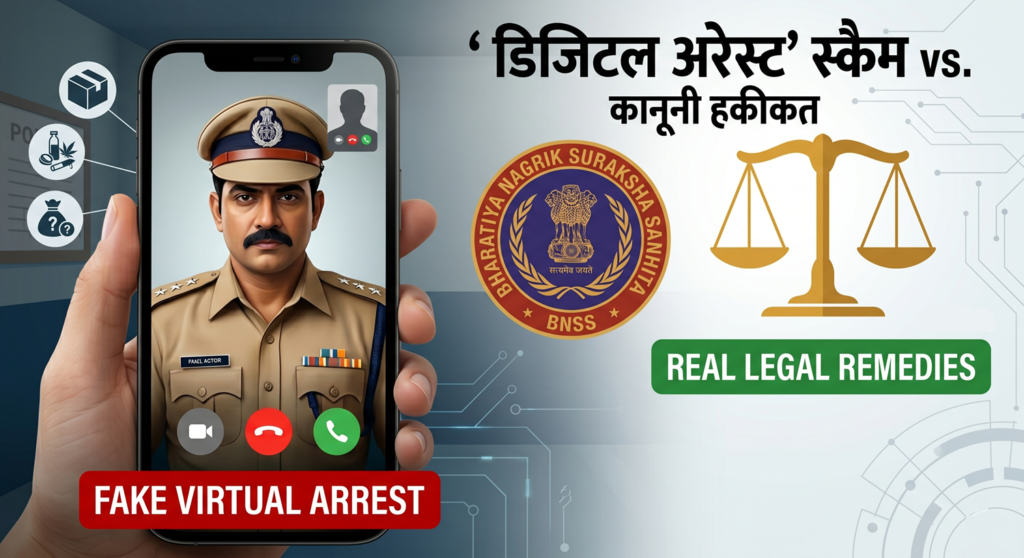
In recent months, a terrifying new breed of cybercrime has swept across India: the “Digital Arrest.” Fraud syndicates are weaponizing fear, impersonating senior law enforcement officers, and virtually imprisoning citizens in their own homes. The financial toll is staggering. Recently, a prominent Indian industrialist was duped out of ₹7 crore after scammers staged a fake “virtual Supreme Court” hearing.
If you are reading this because you or a loved one recently received a threatening video call from someone claiming to be from the CBI, Customs, or the Police, please take a deep breath. You are not alone, and more importantly, you are not legally under arrest.
At Century Law Firm, we have seen a massive surge in panicked clients seeking counsel after falling prey to these highly sophisticated extortion rings. In this comprehensive guide, our legal experts break down exactly what a digital arrest scam is, why it holds absolutely zero legal weight under the Bharatiya Nagrik Suraksha Sanhita (BNSS), and the precise legal steps to freeze and recover your funds.
🛑 What is a “Digital Arrest” Scam? (The Modus Operandi)
Unlike a simple phishing link or OTP fraud, a digital arrest is a deeply psychological trap. Scammers exploit the general public’s lack of familiarity with criminal procedures to create an environment of extreme panic.
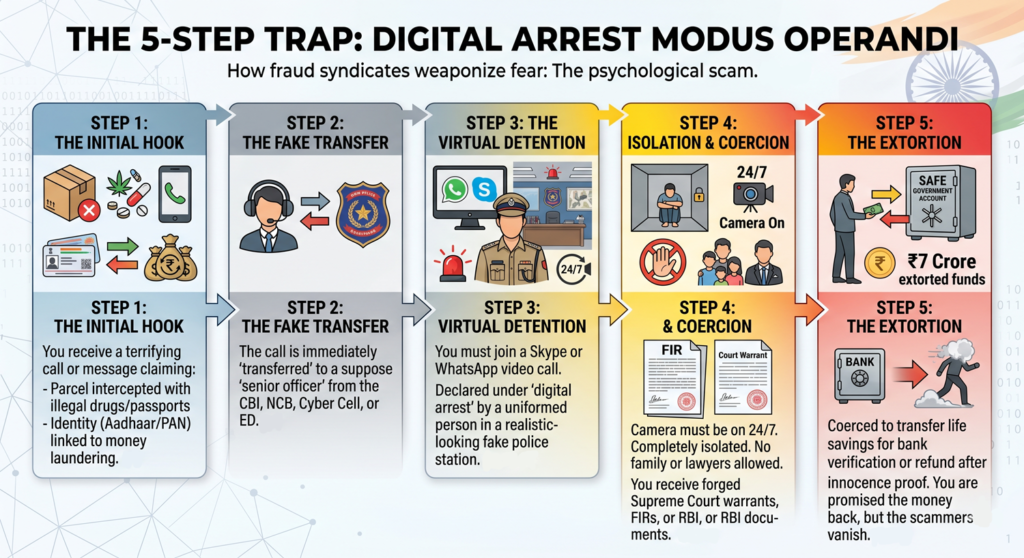
Here is how the 5-step trap is typically set:
- The Initial Hook: You receive an automated IVR call or a message claiming a parcel in your name containing illegal drugs/passports has been intercepted by Customs, or your Aadhaar/PAN is linked to money laundering.
- The Fake Transfer: The call is “transferred” to a supposed senior officer from the CBI, Narcotics Control Bureau (NCB), Cyber Cell, or the Enforcement Directorate (ED).
- The Virtual Detention: You are instructed to immediately join a Skype or WhatsApp video call. When you join, you see a person in a realistic police uniform sitting in a room designed to look exactly like a police station. You are declared under “digital arrest.”
- Isolation and Coercion: You are ordered to keep your camera on 24/7, isolate yourself in a room, and not speak to your family or lawyers. They may send you forged Supreme Court warrants, FIRs, or RBI documents with official-looking stamps.
- The Extortion: To “verify” your bank accounts or clear your name from the fabricated charges, you are coerced into transferring your life savings to a “safe government account,” promising a refund once your innocence is proven. The scammers then vanish.
⚖️ The Legal Reality: Is “Digital Arrest” Valid Under Indian Law?
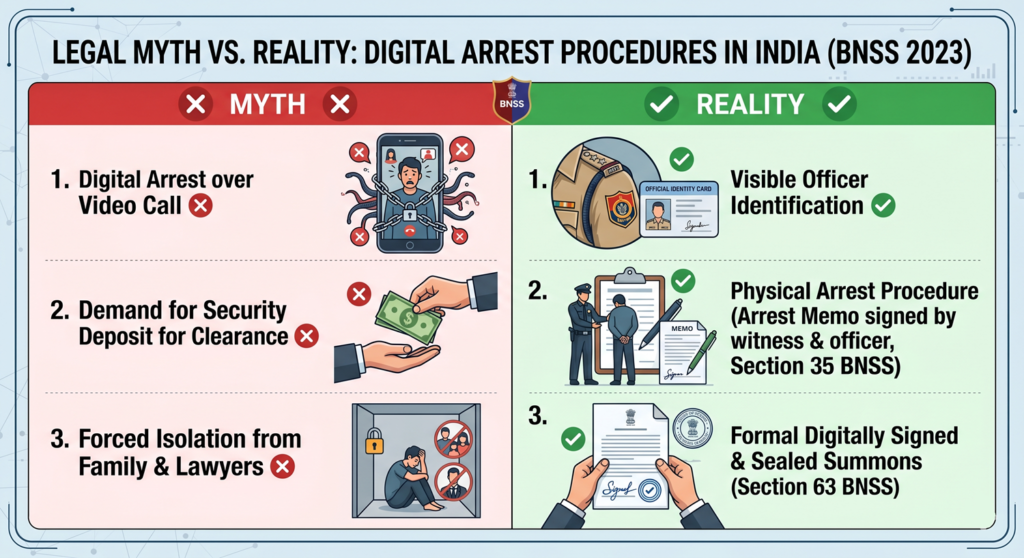
Let us be absolutely clear: There is no concept of a “Digital Arrest” in Indian criminal jurisprudence. Under the Bharatiya Nagrik Suraksha Sanhita, 2023 (BNSS)—which replaced the CrPC—the procedure for arrest and summons is strictly defined to protect citizen rights:
- Section 63 of the BNSS: While this section allows for the electronic service of summons, these summons must be encrypted, digitally signed, and bear the seal of the Court. They are never served casually over WhatsApp.
- Section 35 of the BNSS (Arrest Procedure): An actual arrest requires physical procedure. The arresting officer must bear accurate, visible identification, prepare an arrest memo, and have it signed by a witness.
A legitimate Indian law enforcement agency will never interrogate you over a WhatsApp video call, isolate you from your family, or demand a “security deposit” to clear your name.
🏛️ Legal Remedies: How the Bharatiya Nyaya Sanhita (BNS) Protects You
If you have been targeted, the perpetrators have committed severe criminal offenses. Under India’s new penal code, the Bharatiya Nyaya Sanhita (BNS), 2023, these actions attract stringent punishments. When filing an FIR, our cyber lawyers ensure the following sections are invoked:
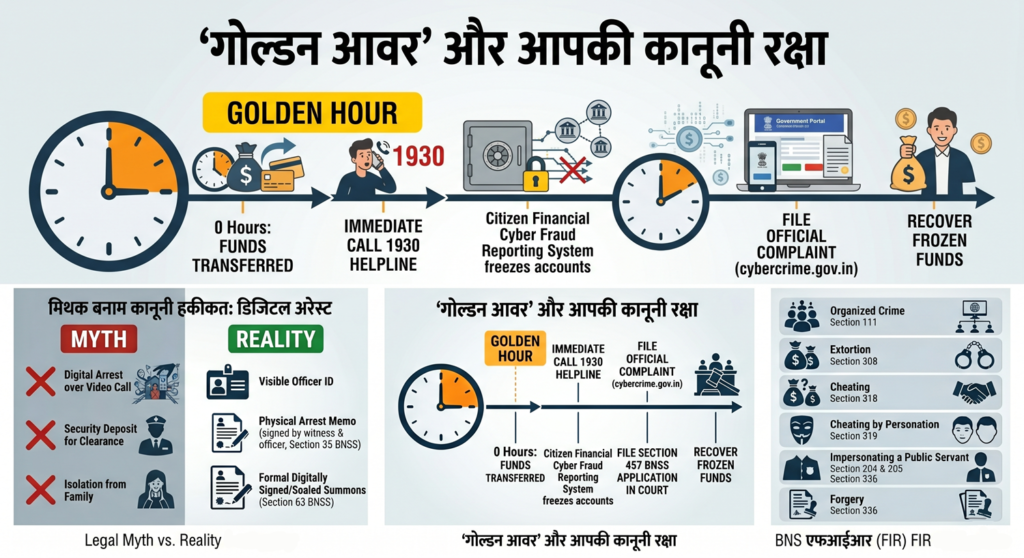
- Organized Crime (Section 111 BNS): Because these scams are run by massive, cross-border syndicates (cyber mafias), this powerful new section can be invoked, carrying immense penalties.
- Extortion (Section 308 BNS): Intentionally putting a person in fear of injury or legal arrest to dishonestly induce them to deliver property or money. Punishable by up to 7 to 10 years.
- Cheating and Dishonest Inducement (Section 318 BNS): Coercing a victim to transfer money by deceiving them.
- Cheating by Personation (Section 319 BNS): Pretending to be someone else to cheat a victim.
- Impersonating a Public Servant (Section 204 & 205 BNS): Wearing the garb or carrying the token (fake ID cards/uniforms) of a police officer or judge.
- Forgery (Section 336 BNS): Creating fake FIRs, arrest warrants, or RBI letters.
Provisions under the Information Technology (IT) Act, 2000
Alongside the BNS, specialized cyber laws apply:
- Section 66C: Punishment for identity theft (misusing your Aadhaar/PAN details).
- Section 66D: Punishment for cheating by personation by using a computer resource.
🚨 Immediate Action Plan: Recovering Your Money
Time is the most critical factor in cyber fraud. Follow the Century Law Firm Action Plan if you are targeted:
- Disconnect Immediately: Do not argue. Cut the call. Real police officers will send a formal physical notice to your address.
- Utilize the “Golden Hour” (Call 1930): If you have transferred money, call the National Cyber Crime Helpline at 1930 immediately. The first 1-2 hours are the “Golden Hour.” The Citizen Financial Cyber Fraud Reporting System can often freeze the scammer’s bank account before the money is moved to crypto or offshore accounts.
- File an Official Complaint: Register your case on the official government portal: cybercrime.gov.in.
- Preserve Evidence: Take screenshots of phone numbers, save the chat history, and keep copies of transaction IDs and forged documents.
- Inform Your Bank: Call your bank to block your accounts and stop further transactions.
How to Get Frozen Money Back (Section 457 BNSS)
If the Cyber Cell successfully freezes the scammer’s bank account containing your money, the funds are technically in police/court custody. The money will not automatically bounce back to your account. You require a lawyer to file an application under Section 457 of the BNSS before a Magistrate to legally claim ownership and direct the bank to release the frozen funds back to you.
💡 Frequently Asked Questions (FAQs)
Q: Can the police or CBI arrest me over a WhatsApp or Skype video call? A: Absolutely not. Under the Bharatiya Nagrik Suraksha Sanhita (BNSS), an arrest requires physical presence, proper identification of the officer, and the preparation of a physical arrest memo.
Q: I transferred money out of fear. Is it possible to get it back? A: Yes, but speed is vital. If you report the transaction to the 1930 helpline within the “Golden Hour,” authorities can freeze the destination bank accounts. Once frozen, a legal application under Section 457 of the BNSS must be filed in court to have the money returned to you.
Q: How do the scammers know my Aadhaar number or PAN details? A: Scammers buy leaked data from the dark web. Just because a caller knows your Aadhaar number, PAN, or home address does not mean they are a legitimate government official.
Q: The caller sent a Supreme Court warrant with an official stamp. Is it real? A: No. The Supreme Court of India, CBI, ED, and RBI do not send arrest warrants or official notices via WhatsApp. These are forged documents created using digital editing tools to induce panic.
Q: What should I do if the caller threatens my family? A: Hang up immediately and block the number. The scammers are operating from remote call centers (often overseas or in specific cyber-crime hubs) and have no physical ability or intent to harm your family. Their only weapon is psychological fear.
Why You Need Expert Cyber Legal Counsel
Reporting the crime to 1930 is only the first step. Navigating the aftermath of severe cyber extortion requires aggressive legal intervention.
At Century Law Firm, our dedicated cybercrime division understands the immense trauma these scams cause. We assist victims in:
- Ensuring the police register a formal FIR under the correct, stringent BNS and IT Act sections.
- Coordinating with bank nodal officers to trace “mule accounts.”
- Filing Section 457 BNSS applications in court to unfreeze and recover your hard-earned money.
Don’t let cybercriminals weaponize the law against you. Know your rights. If you or a loved one has been a victim of a digital arrest scam, contact Century Law Firm today for a confidential consultation.
Disclaimer: This article is for informational purposes only and does not constitute legal advice. If you require legal assistance regarding a cybercrime, please consult directly with your advocates.
Also Read:
