Century Law Firm Logo

Legal Section of the Day

Legal Section of the Day. Here we post one legal section of any Act per day. Check out and Follow us to get your daily dose of legal knowledge

Section 122 in The Indian Evidence Act- Communications During Marriage

Section 122 Evidence Act (Now Section 128 BSA): Communications During Marriage, धारा 122 in Hindi

Section 122 of the Indian Evidence Act, 1872 protected communications between husband and wife. From 1 July 2024 the same rule is in Section 128 of the Bharatiya Sakshya Adhiniyam, 2023 (BSA), word for word. It does two things. A person who is or has been married cannot be compelled to disclose anything his or

Section 122 Evidence Act (Now Section 128 BSA): Communications During Marriage, धारा 122 in Hindi Read More »

SECTION 411 OF IPC Dishonestly receiving stolen property

Section 411 IPC (Now Section 317 BNS): Dishonestly Receiving Stolen Property – Text in English and Hindi, Punishment, Bail and What Must Be Proved

Section 411 of the Indian Penal Code (IPC) punished a person who “dishonestly receives or retains any stolen property, knowing or having reason to believe the same to be stolen property”. Since 1 July 2024 the same offence is Section 317(2) of the Bharatiya Nyaya Sanhita, 2023 (BNS), in the same words and with the

Section 411 IPC (Now Section 317 BNS): Dishonestly Receiving Stolen Property – Text in English and Hindi, Punishment, Bail and What Must Be Proved Read More »

Section of the Day Section 379 Indian Penal Code IPC

Section 379 IPC (Now Section 303 BNS): Punishment for Theft, Bail and धारा 379 in Hindi

Section 379 of the Indian Penal Code (IPC) was the section that punished theft. From 1 July 2024 the same offence is punished by Section 303(2) of the Bharatiya Nyaya Sanhita, 2023 (BNS), and theft itself is defined in Section 303(1) BNS (formerly Section 378 IPC). The punishment is imprisonment of either description for up

Section 379 IPC (Now Section 303 BNS): Punishment for Theft, Bail and धारा 379 in Hindi Read More »

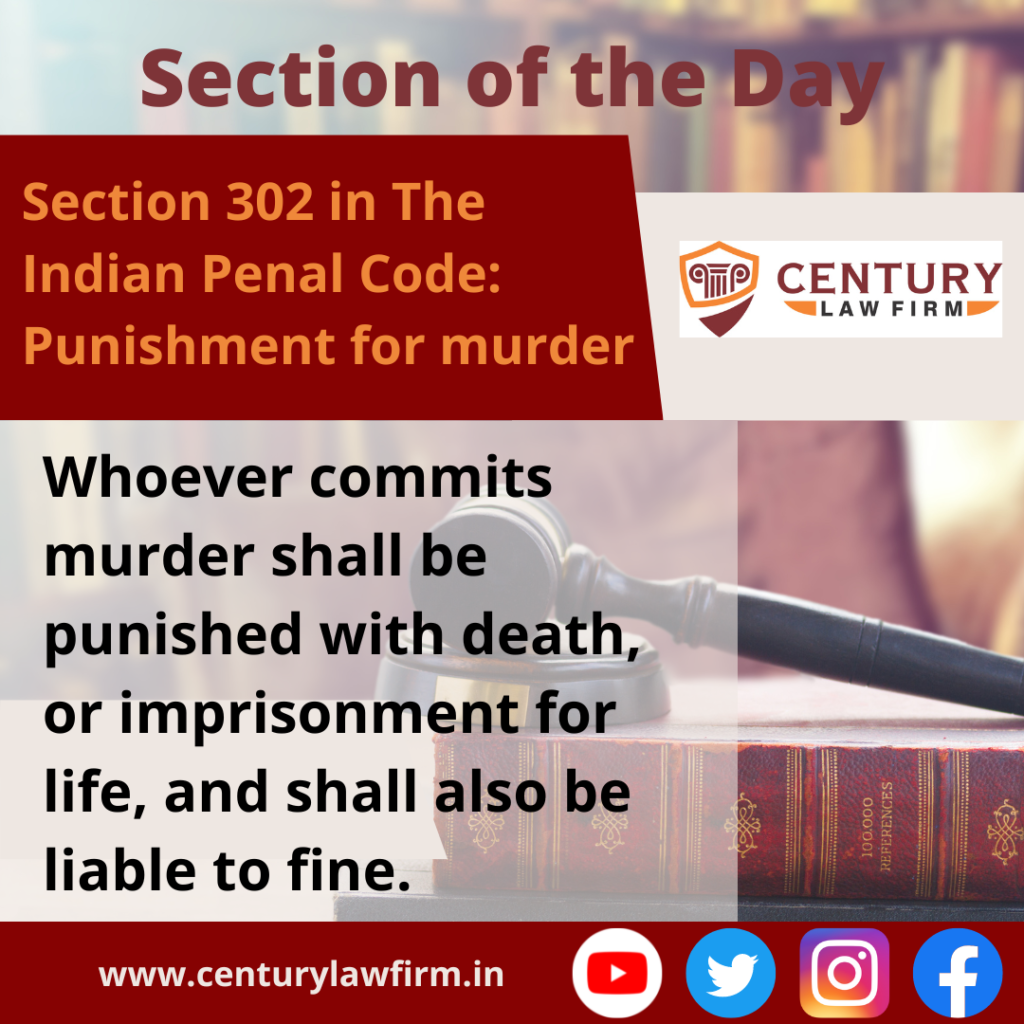
Section of the Day Section 302 Indian Penal Code IPC

Section 302 IPC (Now Section 103 BNS): Punishment for Murder, Bail and Meaning in Hindi

Section 302 of the Indian Penal Code (IPC) is the punishment for murder: “Whoever commits murder shall be punished with death, or imprisonment for life, and shall also be liable to fine.” Since 1 July 2024 the same rule is Section 103(1) of the Bharatiya Nyaya Sanhita, 2023 (BNS), in almost the same words, so

Section 302 IPC (Now Section 103 BNS): Punishment for Murder, Bail and Meaning in Hindi Read More »

Section 2 (h) of Arms Act, 1959 - Prohibited Ammunition | Section of the Day

Section 2(1)(h) of the Arms Act, 1959: Prohibited Ammunition, Prohibited Arms and the Punishment, with the Text in English and Hindi

Section 2(1)(h) of the Arms Act, 1959 defines “prohibited ammunition”. It covers any ammunition that contains, or is designed or adapted to contain, a noxious liquid, gas or similar thing; it expressly includes rockets, bombs, grenades, shells, missiles and articles designed for torpedo service and submarine mining; and it includes anything else the Central Government

Section 2(1)(h) of the Arms Act, 1959: Prohibited Ammunition, Prohibited Arms and the Punishment, with the Text in English and Hindi Read More »

Section of the Day ARTICLE 346 OF THE INDIAN CONSTITUTION, 1949

Article 346 of the Indian Constitution: Official Language for Communication between States and the Union (अनुच्छेद 346 in Hindi)

Article 346 of the Constitution of India decides the language in which one State writes to another State, and in which a State and the Union (the Central Government) write to each other. It says that this “official language for communication” is “the language for the time being authorised for use in the Union for

Article 346 of the Indian Constitution: Official Language for Communication between States and the Union (अनुच्छेद 346 in Hindi) Read More »

Section of the Day 141 Evidence Act

Section 141 Evidence Act (Now Section 146 BSA): Leading Questions – Meaning, When They May Be Asked, Examples and धारा 141 in Hindi

Section 141 of the Indian Evidence Act, 1872 defined a leading question: “Any question suggesting the answer which the person putting it wishes or expects to receive, is called a leading question.” Since 1 July 2024 the same words are Section 146(1) of the Bharatiya Sakshya Adhiniyam, 2023 (BSA), and the next two sections of

Section 141 Evidence Act (Now Section 146 BSA): Leading Questions – Meaning, When They May Be Asked, Examples and धारा 141 in Hindi Read More »

Section 61 Transfer of Property Act (TPA) - Right to Redeem Separately or Simultaneously

Section 61 Transfer of Property Act (TPA): Right to Redeem Separately or Simultaneously

Section 61 of the Transfer of Property Act, 1882 (TPA) deals with a borrower who has given two or more mortgages to the same lender. Unless they have agreed otherwise, once the principal money of two or more of those mortgages has become due, the borrower (the mortgagor) may redeem any one of them on

Section 61 Transfer of Property Act (TPA): Right to Redeem Separately or Simultaneously Read More »

Phone WhatsApp
WhatsApp

Disclaimer

As per The Bar Council of India Rules and The Advocates Act, 1961, an advocate cannot approach his/her client or advertise or promote his profession by way of advertisements or solicitation. Thus, this website has not been created to approach or solicit our client or advertise our firm but to provide some necessary information about our firm and services to our existing clients.

Any user of this website is warned that the contents stated herein are not guaranteed to be accurate, up-to-date or complete. Century Law Firm disclaims all responsibilities and liabilities for interpretation or use of information contained on this website nor does it offer any warranty expressed or implied. The information provided under this website is solely available at your request for informational purposes only, should not be interpreted as soliciting or advisement.

The contents of this website shall not be considered as Legal Advice as the contents thereof is not exhaustive. It is only introductory. In cases where the user has any legal issues, he/she in all cases must seek independent legal advice. We are not liable for any consequence of any action taken by the user relying on material/information provided under this website. The viewer acknowledges that he or she has read and understood the disclaimer as provided hereinabove.