

- Home
- Criminal Lawyer in Delhi
Criminal Lawyers in Delhi –
Defence Advocates
A criminal case in Delhi usually begins with a First Information Report (FIR) registered by the police or a complaint filed before a Magistrate. New cases are registered under the Bharatiya Nyaya Sanhita (BNS), which replaced the Indian Penal Code (IPC) in 2024, with procedure governed by the Bharatiya Nagarik Suraksha Sanhita (BNSS) in place of the Code of Criminal Procedure (CrPC); proceedings that began under the IPC and the CrPC continue under them. Whether the allegation is theft, assault, fraud or a more serious offence, the stage at which an advocate is engaged decides what can be done: before arrest, anticipatory bail; after arrest, regular bail; and at each later stage, discharge, trial and appeal.
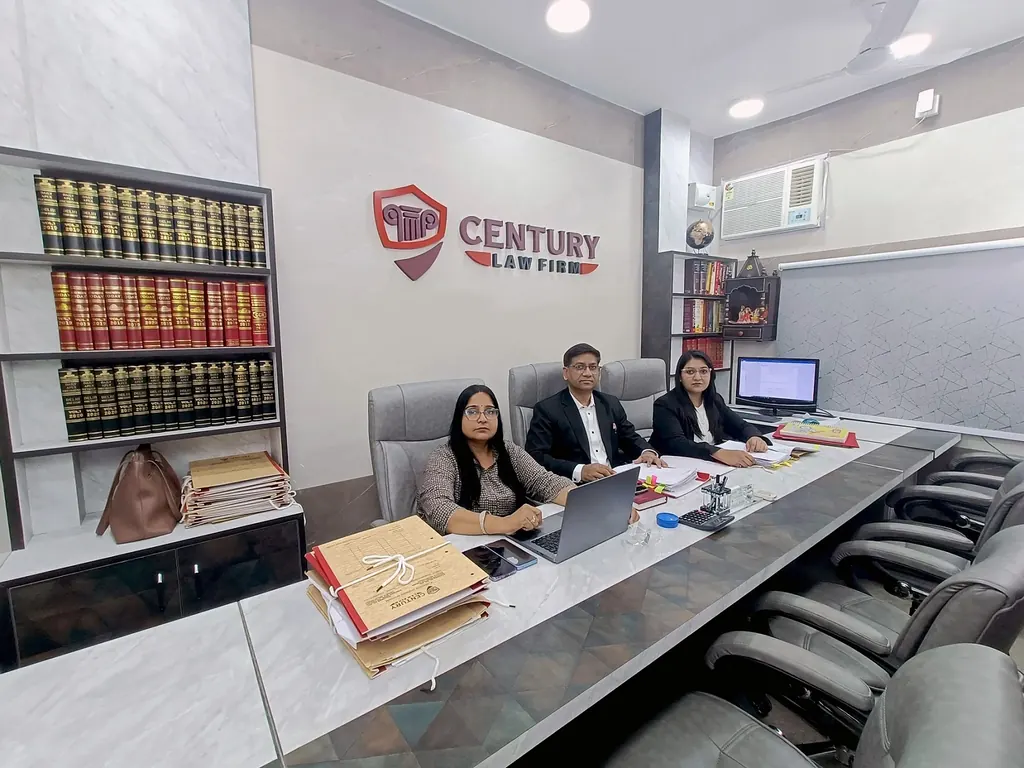
Century Law Firm’s advocates conduct criminal defence from the firm’s chambers at Tis Hazari Courts, Delhi, and appear before the District Courts of Delhi (Tis Hazari, Saket, Dwarka, Rohini, Patiala House and Karkardooma), the Delhi High Court and the Supreme Court of India.
Matters Handled by the Firm’s Criminal Lawyers in Delhi
The firm’s advocates act in criminal matters before the courts in Delhi NCR, including:
Violent Crimes
Cases of murder, culpable homicide, assault, robbery and kidnapping under the IPC and the BNS.
Economic Offenses
Cases of cheating and fraud, money laundering, offences by company officers, cybercrime and other economic offences.
Sexual & Domestic Offenses
Cases under the provisions on sexual offences, the POCSO Act, and the cruelty and domestic violence provisions.
Property & Theft Cases
Allegations of theft, house-breaking, motor vehicle theft and criminal disputes concerning property.
Bail & Anticipatory Bail
Applications for anticipatory bail, regular bail and default bail, and representation from the investigation stage through trial.
NDPS & Narcotics
Defence and bail applications in cases of possession, sale and trafficking under the NDPS Act.
A criminal matter is taken up at whatever stage it has reached: on registration of an FIR, after arrest, on filing of the charge sheet, at trial or in appeal. The advocate studies the FIR and the material relied on by the prosecution, examines the record for procedural lapses, advises on the applications available at that stage – bail, discharge, quashing – and appears at each hearing. After every date the client is told what happened and what the next step is.
The Anatomy of a Criminal Trial in Delhi
A criminal trial in the Delhi courts, whether governed by the Code of Criminal Procedure (CrPC) or the Bharatiya Nagarik Suraksha Sanhita (BNSS), follows a set sequence of stages:
- FIR & Police Investigation: The process typically begins with the registration of a First Information Report (FIR). During this phase the police collect evidence, record statements and may make arrests. An advocate engaged at this stage advises the person named in the FIR on their rights, including the grounds of arrest and the right to legal representation, and can apply for anticipatory bail where arrest is apprehended.
- Filing of the Charge Sheet: On concluding the investigation, the police file a charge sheet (or challan) setting out the allegations and the evidence. The defence examines the charge sheet and the documents filed with it.
- Framing of Charges: The court considers whether the material discloses sufficient ground to proceed. The accused may seek discharge at this stage if it does not.
- Prosecution & Defense Evidence: Witnesses are examined and cross-examined. Cross-examination of the prosecution witnesses is the defence’s principal opportunity to test the prosecution case, after which the accused may lead defence evidence.
- Final Arguments & Judgment: Both sides present their concluding arguments on the evidence. The court then delivers a judgment of acquittal or conviction.
Century Law Firm’s advocates appear at each of these stages before the District Courts of Delhi, including Tis Hazari, Saket and Patiala House, and in appeals and revisions before the Delhi High Court.
Criminal Lawyer in Delhi: What the Work Involves at Each Stage
A criminal lawyer’s work in Delhi follows the stages of the case. At the FIR and investigation stage, the advocate advises the person named in the FIR on their rights and, if arrest is apprehended, applies for anticipatory bail. After arrest, the advocate applies for regular bail and attends the remand hearings. On the filing of the charge sheet, the advocate examines the prosecution material and, where grounds exist, seeks discharge. At trial, the advocate cross-examines the prosecution witnesses and leads defence evidence. After judgment, the advocate advises on and files an appeal or revision. The same framework applies whether the allegation concerns financial fraud, cybercrime, assault, theft, an offence under the NDPS Act or any other serious charge.
When to Engage a Criminal Lawyer in Delhi
A person who learns that a complaint or FIR has been made against them, who receives a notice from the police to appear, or who is arrested, is entitled to consult an advocate at any stage. Some steps are available only early: anticipatory bail can be sought only before arrest, and representations to the investigating officer only while the investigation is pending. The advocate explains the charge, the procedure that will follow in the Delhi courts and the applications open at that stage, so that decisions are taken with knowledge of the law that applies.
Bail Matters & Economic Offences
The Bail Process
Personal liberty is a fundamental right, and bail is usually the first question when a criminal allegation is made. Three kinds of application arise: Anticipatory Bail (protection from arrest, sought before arrest), Regular Bail (release after arrest) and Default Bail (release where the investigating agency has not filed the charge sheet within the period the statute allows). The firm’s advocates move these applications before the Sessions Courts in Delhi and the Delhi High Court. Whether an offence is bailable or non-bailable can be checked in the firm’s BNS offence finder.
Economic Offences Wing (EOW) & Cyber Crimes
Cases investigated by the Economic Offences Wing (EOW) of the Delhi Police, the CBI or the Enforcement Directorate (ED) involve large volumes of documentary and digital evidence, bank records and forensic audit reports.
Defence in such cases involves working through the charge sheet and its annexures, the bank and transaction records relied on and the statements recorded during investigation, and taking up the questions of bail and of the accused’s assets that arise alongside the criminal case. The firm handles matters involving alleged money laundering, banking fraud, breach of trust by company officers and online fraud.
Understanding Criminal Law in Delhi: IPC & BNS
With the implementation of the Bharatiya Nyaya Sanhita (BNS), which replaces the Indian Penal Code (IPC), new FIRs are registered under the BNS while cases registered before the change continue under the IPC. Alongside the BNS, the procedural framework has shifted from the CrPC to the Bharatiya Nagarik Suraksha Sanhita (BNSS).
The firm’s advocates handle matters under both frameworks. In each case the applicable code, the corresponding section numbers and the transitional provisions are identified at the outset, since section numbers, classifications and some procedural rules differ between the two.
How We Work on a Criminal Matter
First Meeting
The advocate hears the facts, reads the FIR, complaint or notice you have received and any court orders, and identifies the stage the matter has reached and the code – IPC or BNS – under which it is registered.
Record and Documents
We obtain the FIR, the charge sheet and the documents filed with it, apply for certified copies of orders, and list the documents and witnesses the defence will rely on.
Options and Fees Explained
You are told the applications open at that stage – anticipatory or regular bail, discharge, quashing, appeal – the time each may take, and the professional fee and court expenses, before the firm is engaged.
Hearings and Updates
The firm’s advocates appear at each hearing before the Delhi District Courts, the Delhi High Court or the Supreme Court of India, and after each date you are told what happened and what comes next.
Contact
Century Law Firm, Chambers 555–556, Western Wing, Tis Hazari Courts, Delhi 110054 · +91-9310411779 · info@centurylawfirm.in
We Handle Criminal Matters in Delhi
Bail & Anticipatory Bail
Applications for anticipatory bail, regular bail and default bail before the Sessions Courts and the Delhi High Court.
Drug Offenses (NDPS)
Possession, sale and trafficking cases under the NDPS Act.
Fraud & Economic Crimes
Banking fraud, corporate fraud and cybercrime allegations, including matters investigated by the EOW and the ED.
Sexual & Domestic Crimes
Cases under the IPC, the BNS and the POCSO Act, and cruelty and domestic violence complaints.
Other Offenses
Theft, assault, robbery, murder and criminal disputes concerning property.
The firm’s other areas of work are listed on the Practice Areas page.
FAQs: Engaging a Criminal Lawyer in Delhi
1. How do I choose a criminal lawyer in Delhi?
Look for an advocate who regularly practises criminal law in the court where your case is pending, ask about experience in matters similar to yours, confirm enrolment with a State Bar Council, and ask for the fee terms before engaging. Advocates in India are not permitted to advertise results, so judge by the advice you receive on your own facts.
2. What types of cases do criminal lawyers in Delhi handle?
Criminal lawyers in Delhi handle any case under the IPC, the BNS or a special statute. This includes theft, assault, fraud, drug offences (NDPS), cybercrime, property crimes, sexual offences (including POCSO cases), white-collar crime and domestic violence. The firm handles such matters from the police investigation stage through trial and appeal.
3. What is the difference between the IPC and the new BNS?
The Bharatiya Nyaya Sanhita (BNS) is the criminal code that replaced the Indian Penal Code (IPC) in 2024. Many offences remain similar, but the BNS introduces new classifications (such as organised crime and terrorism), revises punishments and renumbers sections. Cases registered before the change continue under the IPC, so both codes remain in use.
4. Do I need an advocate if I am accused of a crime in Delhi?
Yes. Criminal procedure is technical, and even an apparently minor offence can have lasting consequences. An advocate can advise you from the first contact with the police, apply for bail, examine the prosecution material and represent you at every stage of the proceedings.
5. When should I contact a criminal defence advocate?
As soon as you learn of a complaint, allegation or FIR against you. Anticipatory bail can be sought only before arrest, and an advocate engaged early can advise you before any statement is made to the police and prepare the defence before the charge sheet is filed.
6. Can an FIR be quashed in Delhi?
Yes. Under Section 482 of the CrPC, now Section 528 of the BNSS, the Delhi High Court has inherent power to quash an FIR where the allegations do not disclose an offence or are absurd or inherently improbable, or where the parties have settled a dispute that is private in nature even though the offence is non-compoundable.
7. How much do criminal lawyers in Delhi charge?
Fees vary with the stage and complexity of the case, the court concerned and the advocate’s experience. The firm explains its professional fee and the likely court expenses at the first meeting, before it is engaged.
8. What is the role of a criminal defence advocate?
A criminal defence advocate protects your legal rights in court. They review the prosecution evidence, prepare the defence, argue applications, cross-examine witnesses and represent you at trial. They also advise on your rights during the investigation, handle bail applications and file appeals or revisions.
9. How can I consult the firm about a criminal matter?
The firm’s chambers are at 555–556, Western Wing, Tis Hazari Courts, Delhi 110054, open Monday to Saturday, 10 am to 7 pm. Meetings are by appointment; the telephone number is +91-9310411779 and the e-mail address is info@centurylawfirm.in.
10. What are my rights if I am arrested in Delhi?
The Bharatiya Nagarik Suraksha Sanhita, 2023 (BNSS) and the Constitution give every arrested person a set of rights that the police must honour: to be told the grounds of arrest and whether the offence is bailable (Section 47 BNSS; Article 22(1)); to meet an advocate of your choice during interrogation (Section 38 BNSS, formerly Section 41D CrPC); to have a relative or friend informed of the arrest and the place of detention (Section 48 BNSS); to be produced before a Magistrate within 24 hours (Section 58 BNSS; Article 22(2)); to a medical examination (Section 53 BNSS); and to remain silent on questions that may incriminate you (Article 20(3)). If you cannot afford a lawyer, the court must provide one at State expense (Section 341 BNSS). Our detailed guide to the rights of an arrested person explains each of these with the relevant case law.
11. What should I do if I am falsely accused of a crime?
Stay calm and do not confront the complainant or post about the matter on social media – anything you say can be used against you. Preserve everything that supports your version: messages, call records, emails, CCTV footage, travel records and the names of witnesses. Consult a criminal lawyer immediately: if arrest is apprehended, an application for anticipatory bail under Section 482 BNSS can be moved before the Sessions Court or High Court, and where the FIR discloses no offence or is plainly malicious, a petition to quash the FIR under Section 528 BNSS (formerly Section 482 CrPC) lies before the Delhi High Court. Cooperate with the investigation through your lawyer, attend when summoned, and let counsel handle all communication with the police and the complainant.
12. Can I get free legal aid in a criminal case in Delhi?
Yes. Under the Legal Services Authorities Act, 1987 and Article 39A of the Constitution, the Delhi State Legal Services Authority (DSLSA) and its district authorities in every court complex provide free panel advocates to eligible persons – women, children, members of Scheduled Castes and Scheduled Tribes, persons with disabilities, victims of trafficking or disaster, industrial workmen, and anyone whose annual income is below the prescribed limit. Every person in custody is entitled to legal aid regardless of income, and under Section 341 BNSS the court must assign a lawyer at State expense to an accused who has none. Legal aid extends through all stages, from remand to appeal.