Century Law Firm Logo

Latest News

Latest legal news, judgments and explainers from Century Law Firm, Delhi.

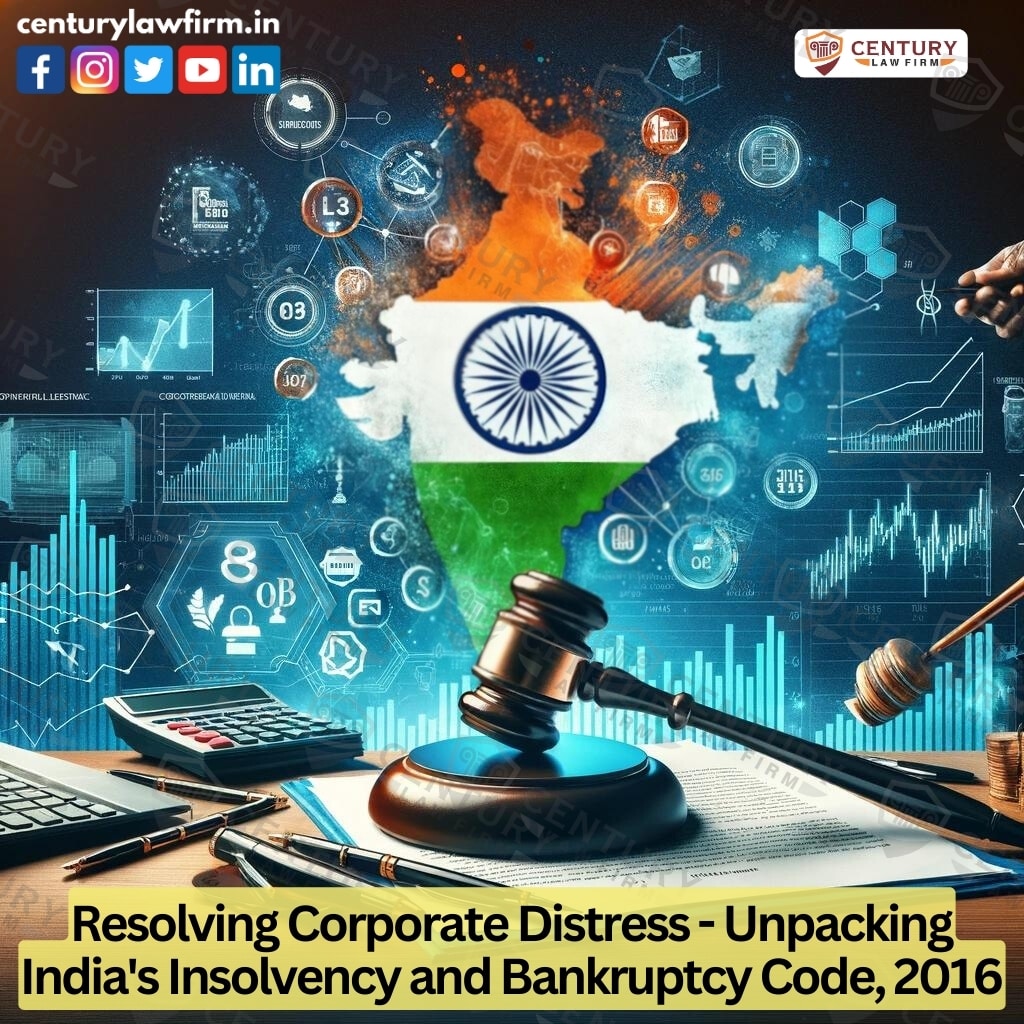
Resolving Corporate Distress - Unpacking India's Insolvency and Bankruptcy Code, 2016

Resolving Corporate Distress – India’s Insolvency and Bankruptcy Code, 2016

Introduction This Article tells about the importance of enforcement of Insolvency and Bankruptcy code,2016. As erstwhile regime in respect of the revival of companies were not so effective for the companies or organizations, LLP and Partnership firm. The enforcement of this code is to protect the interest of the corporate debtor, creditors (operational/financial) of the

Resolving Corporate Distress – India’s Insolvency and Bankruptcy Code, 2016 Read More »

Revolutionizing Justice Unveiling India’s 2023 Legal Reforms – Bharatiya Nagarik Suraksha Sanhita (BNSS), Bharatiya Nyaya Sanhita (BNS), and Bharatiya Sakshya Sanhita Century Law Firm

BNS, BNSS and BSA Full Form: Bharatiya Nyaya Sanhita, Bharatiya Nagarik Suraksha Sanhita and Bharatiya Sakshya Adhiniyam, 2023 – Hindi Names, Sections and Dates

BNS stands for the Bharatiya Nyaya Sanhita, 2023, BNSS for the Bharatiya Nagarik Suraksha Sanhita, 2023 and BSA for the Bharatiya Sakshya Adhiniyam, 2023. They are India’s three new criminal laws. Since 1 July 2024 they have taken the place of the Indian Penal Code (IPC), the Code of Criminal Procedure (CrPC) and the Indian

BNS, BNSS and BSA Full Form: Bharatiya Nyaya Sanhita, Bharatiya Nagarik Suraksha Sanhita and Bharatiya Sakshya Adhiniyam, 2023 – Hindi Names, Sections and Dates Read More »

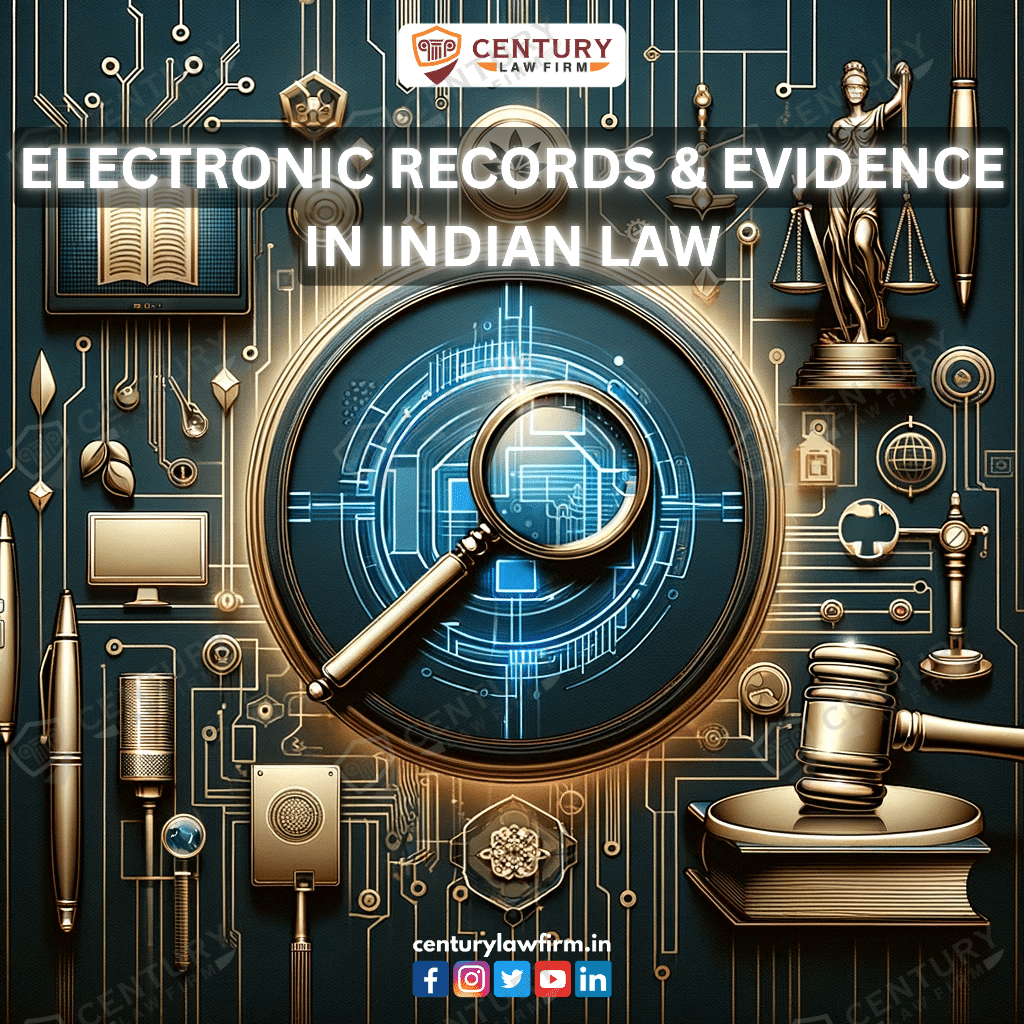
Navigating the Digital Frontier The Complete Guide to Electronic Records & Evidence Century Law Firm

Electronic Records and Evidence in India: Legal Recognition, Section 61 BSA, Section 63 BSA (formerly Section 65B), the Certificate and Landmark Supreme Court Cases

Emails, messages, call records, CCTV footage, files on a phone or a server: all of these can be evidence in an Indian court. Since 1 July 2024 the law that governs them is the Bharatiya Sakshya Adhiniyam, 2023 (BSA), which replaced the Indian Evidence Act, 1872. Section 61 of the BSA says that an electronic

Electronic Records and Evidence in India: Legal Recognition, Section 61 BSA, Section 63 BSA (formerly Section 65B), the Certificate and Landmark Supreme Court Cases Read More »

The Role and Admissibility of Forensic Evidence in the Indian Criminal Justice System Indian Evidence Act

Forensic Evidence in India: Role and Admissibility under Section 39 BSA (Section 45 Evidence Act), FSL Reports under Section 329 BNSS, DNA, Narco Tests and the Chain of Custody

Forensic evidence is admissible in Indian criminal trials mainly as the opinion of a person “specially skilled” in science or any other field. The rule is Section 39 of the Bharatiya Sakshya Adhiniyam, 2023 (BSA), formerly Section 45 of the Indian Evidence Act, 1872: when the court has to form an opinion “upon a point

Forensic Evidence in India: Role and Admissibility under Section 39 BSA (Section 45 Evidence Act), FSL Reports under Section 329 BNSS, DNA, Narco Tests and the Chain of Custody Read More »

Polygamy and Polygamous Marriages in India: An In-depth Look into Practices and Legal Framework. Century Law Firm

Polygamy and Polygamous Marriages in India: Meaning, History and What the Law Says for Each Community

Polygamy means being married to more than one person at the same time. In India the answer to “is polygamy legal?” depends on the law that governs the marriage. For Hindus, Buddhists, Jains and Sikhs, for Christians and Parsis, and for anyone married in a court marriage under the Special Marriage Act, a second marriage

Polygamy and Polygamous Marriages in India: Meaning, History and What the Law Says for Each Community Read More »

Res Gestae cover image century law firm

Res Gestae in Indian Law: Section 4 of the Bharatiya Sakshya Adhiniyam (formerly Section 6 of the Evidence Act), with Examples and Case Law

Res gestae is the rule of evidence under which facts that form part of the same transaction as the fact in issue are relevant, even though they are not themselves in issue. In practice it is how a court hears what the victim, the accused or a bystander said or did at the time of

Res Gestae in Indian Law: Section 4 of the Bharatiya Sakshya Adhiniyam (formerly Section 6 of the Evidence Act), with Examples and Case Law Read More »

Environment Protection Act of 1986: Safeguarding Nature for a Sustainable Future

The Environment (Protection) Act, 1986: Objectives, Salient Features, Sections, Powers, Penalties after the Jan Vishwas Act and Landmark Cases

The Environment (Protection) Act, 1986 is India’s general law for protecting the environment. It gives the Central Government the power to take “all such measures as it deems necessary or expedient for the purpose of protecting and improving the quality of the environment and preventing, controlling and abating environmental pollution” (Section 3(1)). It is Act

The Environment (Protection) Act, 1986: Objectives, Salient Features, Sections, Powers, Penalties after the Jan Vishwas Act and Landmark Cases Read More »

The Enemy Property Act: A Comprehensive Guide to India's Historical Legislation

The Enemy Property Act: A Comprehensive Guide to India’s Historical Legislation

1. Introduction Brief Overview of the Enemy Property Act The Enemy Property Act is a piece of legislation that has its roots deeply embedded in the tumultuous history of India. At its core, the act deals with the issue of properties left behind by individuals who migrated to enemy countries during times of conflict. The

The Enemy Property Act: A Comprehensive Guide to India’s Historical Legislation Read More »

Phone WhatsApp
WhatsApp

Disclaimer

As per The Bar Council of India Rules and The Advocates Act, 1961, an advocate cannot approach his/her client or advertise or promote his profession by way of advertisements or solicitation. Thus, this website has not been created to approach or solicit our client or advertise our firm but to provide some necessary information about our firm and services to our existing clients.

Any user of this website is warned that the contents stated herein are not guaranteed to be accurate, up-to-date or complete. Century Law Firm disclaims all responsibilities and liabilities for interpretation or use of information contained on this website nor does it offer any warranty expressed or implied. The information provided under this website is solely available at your request for informational purposes only, should not be interpreted as soliciting or advisement.

The contents of this website shall not be considered as Legal Advice as the contents thereof is not exhaustive. It is only introductory. In cases where the user has any legal issues, he/she in all cases must seek independent legal advice. We are not liable for any consequence of any action taken by the user relying on material/information provided under this website. The viewer acknowledges that he or she has read and understood the disclaimer as provided hereinabove.